

|
SOCIAL |


|
|
|
|
|
FREE
$$$
& OTHER |
|
|

Welcome to my music portfolio. This website presents my music projects, collaborations, and creative work over the years. It reflects my journey with music as a personal hobby and passion. | ||
|---|---|---|
| Markus Edizon Helenius | Info & Social | |
 |
🎵From Finland  🏆JLSC Winner Certificate 2023 🏆YLEX Plays 🏆UKSC Highly Commended Rating 2023 🏆KMC Tour 2023 🏆Orivesi Culture Award Winner 2023 🏆HXA Remix Competition Winner 2024 (My version was featured on YleX) 🏆PB of 340 projects / year 2022 🏆WR Unreal Gold Speedrun 2021 |
|
|
💙Socials: @Edizonstudio |
||
Music Archive (Past Projects)
|
||

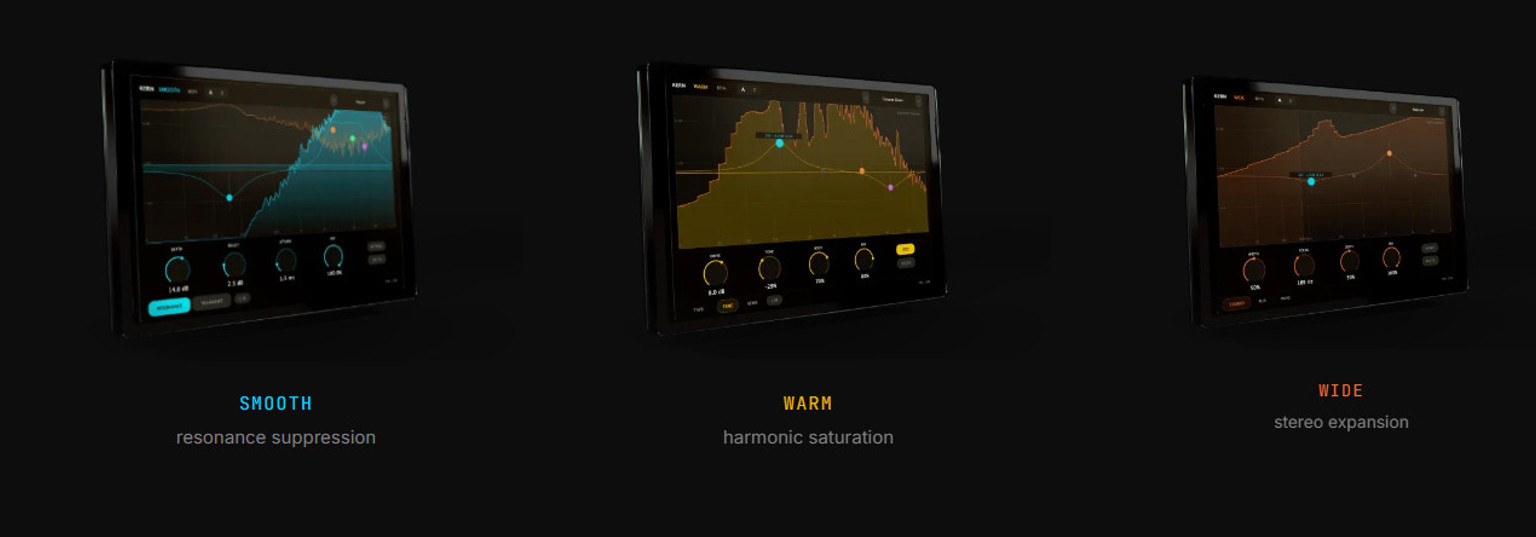
Kern Audio Plugins Bookmark the site CTRL+D. Scroll over and enjoy! ARTIST PICK
Edizon - Edizon Fitness Hockey Highlights 2026 -Edizon, "Signing out" Playlists Spotify: Finnish Music
|
|---|
Feedback |
|---|
NEWS (GMT+3) |
|---|
Post added: May 03.2026 at 9:01PM |
|---|
|
Finding the Blueprint – And Realizing It Doesn’t Exist I’ve been thinking about this for a very long time. Recently, I realized that I’ve finally reached the answer to the original purpose that defined both my life and my artist career. That purpose was simple, yet incredibly complex: to discover the blueprint of artistic success. What does success actually mean for an artist? My goal was to find that answer so clearly that I could one day write a guide — something that would allow any artist to rise to stardom. After years of searching, I’ve found the answer. There is no blueprint. The Journey I started playing guitar at the age of 12–13 and continued daily for 18 years. My journey into production started early as well — I got my first audio interface, the M-Audio Fast Track Pro, when I was just 15 years old. Before that, I was recording with cassette players and a cheap Biltema microphone… not exactly high-end gear, but it worked. Since then, I’ve spent countless hours in the studio — right up to this day. I gave everything to this craft. I turned over every stone. And I’m proud of that. The Illusion of Merit At first, I believed that success in music was about skill, talent, and effort — that if you became good enough, the results would follow. But over time, I started to see something else. The industry operates heavily on what could be described as a power law. Talent, skill, and artistic uniqueness exist — but they operate almost like they are in the first power. Meanwhile, everything else — money, connections, timing, luck, the right song at the right moment, audience behavior, algorithmic signals — these operate in exponential layers. This means that success is not a linear result of quality. It is a multiplied outcome of external forces. The Algorithm and Reality For example, we can clearly observe how algorithms behave. A person doesn’t necessarily need to be highly talented to gain massive visibility. In some cases, even moderate visual appeal alone can generate significantly higher engagement — likes, shares, comments — which then signals the algorithm to amplify the content further. The result can easily be 10x visibility compared to someone more skilled but less favored by these dynamics. That’s the system. At the same time, I’ve personally seen strong performance metrics on my own platforms — in some cases achieving conversion rates (views-to-followers) that are 4–5 times higher than artists backed by major inner-circle promotion, including the Helsinki core scene. And still — that alone does not guarantee scale. Because scale is not purely earned. It is triggered. The Pain of Truth One thing has always been extremely important to me: Everything I say must withstand scrutiny. If I claim something, it has to hold up when examined. It has to be true. Ironically, that mindset made this industry much harder to accept. Because the deeper I looked, the clearer it became: this is not a system where “the best” wins in any absolute sense. And that realization is painful — especially for someone who values logic, fairness, and measurable results. But I’ve made peace with it. Letting Go There is something psychologically important about the artists who do succeed: At some point, they let go. They release their work. They accept imperfection. They keep going. Every song you hear on the radio is imperfect. You can analyze any of them critically and find flaws — things that could have been done differently. But those artists had the courage to say: “I am enough.” And that matters more than perfection ever will. Even in my own career, some songs that reached radio were not the ones I personally would have chosen. On a small, subjective level, that can feel frustrating. But on a larger scale — it’s a gift. Human Nature When you zoom out even further, this isn’t just about music. This is about human nature. We live in a time where attention can be manipulated, where systems reward engagement over depth, and where relationships themselves seem more fragile than before. “Good times create weak men.” There is something fundamentally off-balance in how we treat each other and how self-centered we have become. Books like Rich Dad Poor Dad emphasize that if you want to receive something, you must first give. Yet modern systems often incentivize the opposite. Even large-scale events reflect this same pattern — the Russian invasion of Ukraine is, in many ways, another example of human contradiction. Conflict over cooperation. Division over unity. A New Perspective I want to apologize if this text feels provocative. But I needed to write it. There has been a lot of emotion inside me — maybe even pressure — and releasing it brings a sense of relief. At the same time, I feel something else: Peace. Through everything I’ve achieved and experienced, I’ve reached a kind of inner calm. Not because I “won” the game — but because I finally understand it. The mystery is solved. And the answer is not what I expected. What Actually Matters There is something real, though. Call it an X factor. At the end of the day, what matters is simple: How you make people feel. That is what they remember. Moving Forward I did everything I could. I gave my all. No one needs to be perfect — because perfection does not exist. Now, my focus has shifted. I want to build my work — and even my life — around giving. Helping others. Creating something meaningful, without trying to “game” the system. Step by step, growing organically. Because you deserve the best. This might sound like a farewell message — but it’s not. This is the beginning of something new. Music will never stop being part of my life. It’s an essential part of being human. As Johnny Depp once said:
“Music touches us emotionally, where words alone can’t.”
|
Post added: June 25.2025 at 9:10PM |
|---|
|
Small victories I think this is important topic. And I noticed people talking about it alot lately. GBR - Great Barrier Reef. It's never too late to do what you can for making things better. I took the liberty of writing sarcastically and making it as a joke. Even tho the topic of this track is quite serious. I think for the lifelihood and future of humanity it is important to keep on doing things better in the future if we want to be along. I will write this better later. It's been long day with metadata and other stuff regarding the release. Cutting the video. I really am still a one man show. Even tho I'm having a kid. Thank you.
Regards |
Post added: June 25.2025 at 9:25PM |
|---|
|
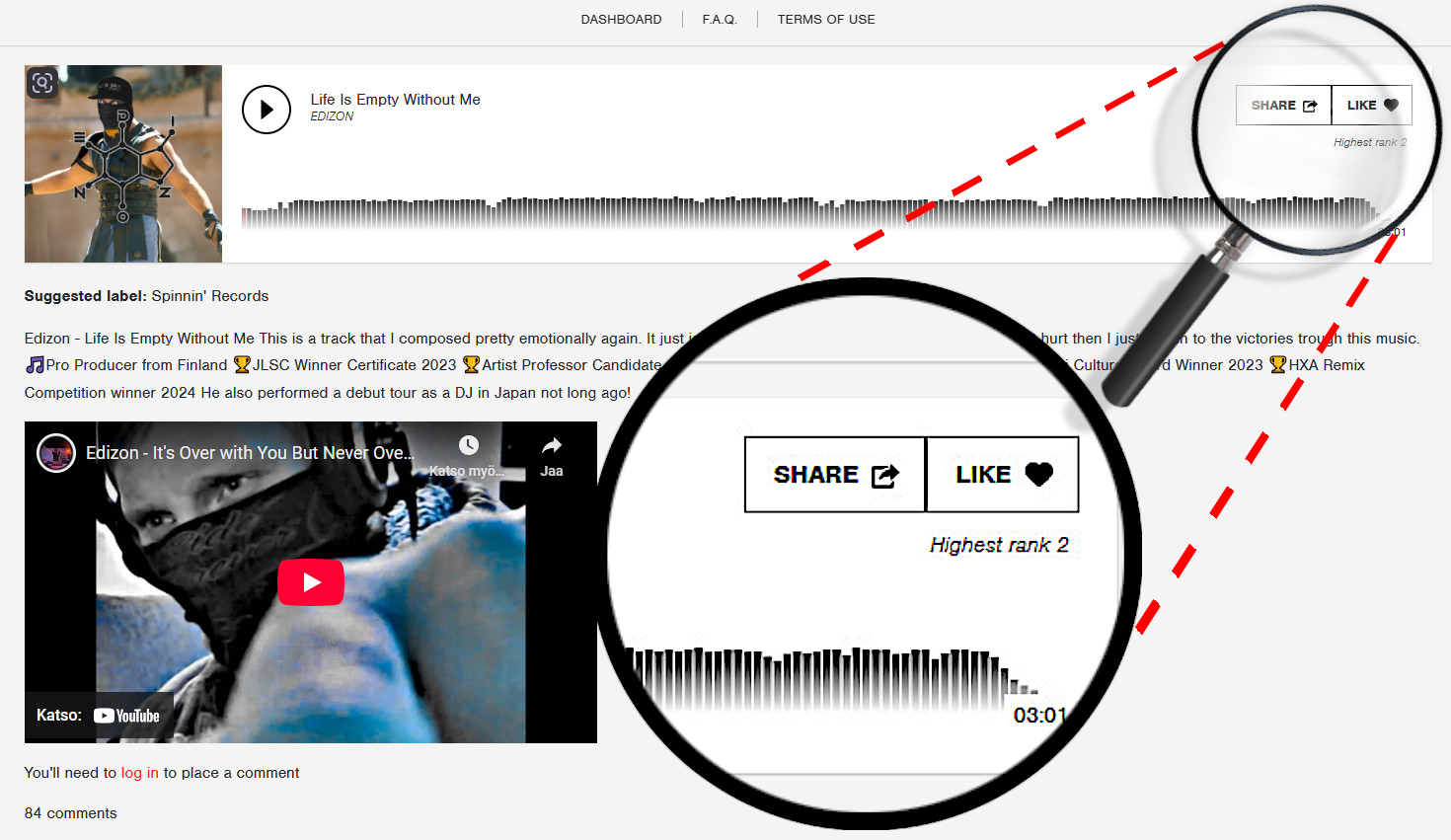
Small victories I believe it is always essential to share even the smallest victories here. I managed to secure 2nd place in the Spinning Records Talent Pool with my track
Life Is Empty Without Me. For those who visit this page and are unfamiliar with Spinning Records, it is the very label that signed Martin Garrix when he released the track Animals. Listen the track and check the final ranking placement from Spinning Reocrds! Take very much care. Everyone! |
Post added: June 11.2025 at 10:33PM |
|---|
|
Finding my Inner Peace Taming my inner demons and finding that inner peace. No highs and no lows. Just peace. Here is a glimpse of what happened in form of quick chat with a friend so I don't have to tell the full story and every dirty detail of it. |
Post added: December 22.2024 at 02:28PM |
|---|
|
My Christmas Calendar
I hope Christmas went great for everybody and we gained a few pounds! ;) |

Post added: November 11.2024 at 11:18PM |
|---|
|
New World Tour Dream I have never harbored a dream as grand as this one. At present, my objective is to explore the world. I would like to take a moment to outline the vision I have conceived: it involves performing 1 to 3 gigs in each country, allowing me to undertake my world tour on my own terms and in the most economical manner possible. I aim to perform wherever and whenever the opportunity arises, progressing swiftly along the way. This tour does not necessarily need to be executed in a continuous sequence; it can include breaks or focus on one country at a time. However, it would be wonderful if it could be accomplished in one cohesive journey. 
My intention is to travel from Finland to Sweden, then to Denmark, followed by Germany, the Netherlands, and possibly Switzerland, before proceeding to France and Spain, including stops in Ibiza and Gibraltar. I plan to venture into Africa, then to the United States, visiting New York, Texas, and Las Vegas, before heading to Hollywood and Los Angeles, California. After my experiences in Japan, I aim to reunite with my brother in the Philippines, and ultimately, my journey will conclude in Australia, where I will be prospecting for gold as the final chapter of this adventure. Added December. 27th. 2024: 50e + 100e donated so far. Thank you for your contributions! I will for fun update this sum here if I remember! |

Post added: July 28.2024 at 02:30PM |
|---|
|
Continuing my Radio Dream Very happy to announce that HXA Remix competition 2nd place winner Evil Eyes (Edizon Remix) got radio plays on the best possible radio channel in finland YleX (They pay the best). Funny detail / "fun fact" in the situation is that the winner track didn't get radio plays. So I'd like to put it so that this makes it so that my track was closer to be a winning track than you think. This
fix will also be included in my CV / portfolio. Thank you alot DJ Orion, Juska Wendland !    EDIZON, HXA - EVIL EYES (EDIZON REMIX) |
Post added: July 07.2024 at 09:45PM |
|---|
|
MANIFESTO OF THE FORCE  Forgot to mention that these flyers are gonna be everywhere soon. Feel free to Join the force. About the agenda of the force I will go over and describe more later. Please follow all of social medias and use tags @Edizonstudio and / or #Edizonstudio when posting. I will be rewarding all of your hard work. Thank you! Ghost of the Shadow of Death, Makes me undead. |
Post added: July 07.2024 at 09:30PM |
||
|---|---|---|
|
KMC ALBUM IS BACK!
Travels and Possible Opportunities I'm really happy to announce there is possible DJ opportunity in Germany coming up. I was already asked to go. Happily waiting it to unfold. |
||

Post added: February 02.2024 at 04:55PM |
|
|---|---|
|
Edizon - HXA Remix Competition 2nd place Winner
Collaboration with legendary John Covert I also finalized the production collaboration with legendary John Covert (BMI). Hope him alot of luck with the Hollywood movies, ads and games licensing pitching! Project was super fun time but consumed me alot. Certainly hope we achieve something great again with the track. This was also the main sad reason why I had to take KMC album down from all stores. We worked on one of the albums tracks for the licensing so I do not want to run in to any form of copyright issues since we have a contract for the track. If you want to know we just basically changed lyrics, re-recorded it and made it a tad bigger to captivate the listener. Gig in YO-Talo Was a blast 
I started really strong and people were chanting. Fast forward to the final voting there was people yelling loud and they want "EDIZON TROUGH!" to the next round. Sadly I didn't get enough votes.
But when I counted mathematically I got most votes per member count. Since I'm alone it might be more easy to achieve but in that sense it was a landslide to my direction. So a mental victory
we can savely say. |
|

Post added: November 02.2023 at 00:19AM |
|
|---|---|
|
Markus Edizon Helenius the new Culture Award Winner 2023 This is a crazy year for me I have to say. It's been achievement after achievement. I feel like I really "made it" in many ways this year. Now it's just matter of enjoying the crops of my craft. I truely just needed to be brave and work hard towards it believing in it blindly and bravely. The money is good I have to say and just a bonus. It's just a byproduct of being productive. I many ways believe I was never in it for the money, but hard work will pay. It's like more you just focus on giving, the more you will get. I lived trough the make it or break it phase, that noone believed in but me and came out as a fucking legend. Now everything I touch turns to gold. Jeff Bezos said: "A calling gives you purpose and makes you unstoppable." The craziest thing is that I never went to school for this. I just had a passion. I followed my heart and my ears. I just say if you have a calling you are up to something. Just stay healthy on the process. For me that's where I've struggled with. Maybe there was nobody to balance me up because I was just working alone like a mad man 7 days a week. But this is where we get with hard work. You can also do it. Please get inspired. This is what is my purpose. To inspire you.
I want to end the year...
...By of course saying merry christmas, my favourite time of the year to everybody!!! 🎅
|
|

Post added: November 02.2023 at 00:19AM |
|---|
|
Kansai Music Conference was a Huge success
I'm really struggling here when writing this because there would be book full of stories
from my beautiful trip to Japan. But I promise to keep it really short. Afterall you will find most of
the stories from my social medias. @Edizonstudio Oct 7: Osaka, Museum of History, 4th fl. @ 2:45PM (Local)
All the gigs went well. I was even surprised how easy and natural playing live with DJ Controller felt. Just want to point out here it was my first DJ Style gig and yeah 13 000km from my home town.
It was so easy. I already feel like a total pro.
You can watch the whole trip on my YouTube Channel: |


Post added: September 05.2023 at 05:05PM |
|---|
1 month to go before Japan I'll be having 2 gigs in Kansai Music Conference. GIG 1: Oct 7: PLACE: Osaka, Museum of History, 4th fl.
TIME: Open 12:00 / Start 12:30. My performance will be held in Alchemy Kobe. No idea of clock times at this point. I will update this when I know better. Here is few old pictures from the place. Kansai Music Conference Official Page I bought new controller for the gig Some of the Magazines that wrote reviews of my track Rotten Lemons: COST OF ALL OF THIS??? $$$ Life's an adventure and about time I break the ice with gigs outside of the comfort of my own country. Afterall people (my brother Jarkko lol) have been telling that Japan is really untouched and beautiful country with pure culture. They even say it's the best place you could travel this day. I really hope this is what I see there also. I can't wait. I'm also so happy that I feel so healthy and well now. So much graditude over this. It's gonna be perfect! I'm glad that all of the toxicity is out of my life and I surround myself only with positivity and people with good intentions. |


Post added: August 03.2023 at 11:55PM |
|---|
There seems not to be an end to my success story I am really happy that my hard daily work and efforts are truely building these achievements. I again have something beautiful to put on my wall and what to be proud of. See the image. Maybe people don't have energy or time for my emotions but...
Long story short she kinda broke my heart and I ended up in a hospital. The case just messed with my emotions, with my mental wellbeing. Atleast we had some great time together. Only thing what I regret is that it was pretty good friendship and it kinda got ruined. Rule is never to be scared of love in life. Love needs to be given it all then and only then you can get it all. I made a new Soundcloud account. I feel like in 10 days span I composed and roughly mixed like 8 indivitual tracks about the topic and living 100% trough those feelings. Thank you |

Post added: May 22.2023 at 00:39AM |
|---|
I got super inspired by Käärijä
Firstly I need to be completely honest. I didn't like Käärijä at first. But then after hearing the track Cha Cha Cha and seeing him perform and seeing him in interviews I fell in love. I actually heard the track for the first time the day before Eurovision finals. He proved he's an alpha and a real humble guy! Lots of respect! To me Eurovision 2023 was a win for Finland. The most important "people" loved the song the most. So that been said. |
Post added: March 25.2023 at 00:33AM |
|---|
Signed with Wowland Records New year started pretty strong. At the end of last year I started working with great new singers. Including artist called Neodym. She's a great singer originally from Poland. We made pretty experimental track wich is coming out soon trough label called Wowland Records. Atleast a free marketing campain's going to be set in it's place. I think the value is somewhere in between 100e to 500e range. So kinda minor(label) thing but fun and easy. I'm allways glad that my work is valued so the money just moves.
Another release with a managing director of Terassi Media Oy Second really important release wich we just rushed out within 3 day deadline was collaboration with managing director of Terassi Megia Oy Eeva Ek who's working with the artist name EEWA. Song title is Start It Over. Very dancy and groovy Pop/EDM-styled "bassy and bouncy" dance track. Very happy with the end result! Please enjoy the track, NOW! =D
Go to my spotify to hear these collaborations! |
Post added: September 30.2022 at 11:48AM |
|---|
I'm Back With a New Site and New Meaning Site has been updated for my new needs with a new web page address. I wanted to use my old template so you can still find some stuff that has happened in my history. There is some holes in my story and I know you aren't interested in hearing everything about what has happened over the years. I was just digging my old computer and found this old page wich I actually used alot of energy to build. So yeah new times new stories!
I will just briefly tell that after I quit with the United Flames I decided to pursue a mixing studio career. We started by doing music with rapper Vilzue in project called Edizon & Vilzue. We did alot of music together. I started taking some work on early 2017's to tune people vocals. I became pretty good at that work since I recorded pretty much something every day. From year 2018 I started really develope my skill and then one year later I was ready to put out my first full album of EDM music. Yeah you heard right. I completely switched my genre. I won the title "Artist of the week" in Steve Marks DEMO Drop with the signed song Make Him Say. This was obv before I even finished the song since it's demo drop... Later this year I ended up also in JLSC (John Lennon Songwriting Contest) finals with the song Love Lost feat. LIKEBLUE. There the prizepool is over 300 000$. So yeah a crazy year. It felt as if everything happened simultaneously, although for a long time it seemed that nothing would happen.
New idea with the site is to promote my own music and trough that inspire people. Feel free to get in touch for general feedback or music discussion: Edizonstudio@gmail.com
|


| Back to Index |
Feel free to get in touch for general feedback or music discussion: Edizonstudio@gmail.com. You can also visit my YouTube channel for more music and videos. Edizonstudio 
© 2010-2026 Markus "Edizon" Helenius ***Privacy Policy***